

Last updated September 10, 2026
Full 25-point door and opener safety check with every visit - springs, cables, rollers, tracks, and your LiftMaster or Chamberlain opener included
You get a price before we start. It does not change when the truck arrives.
 Before
 After
After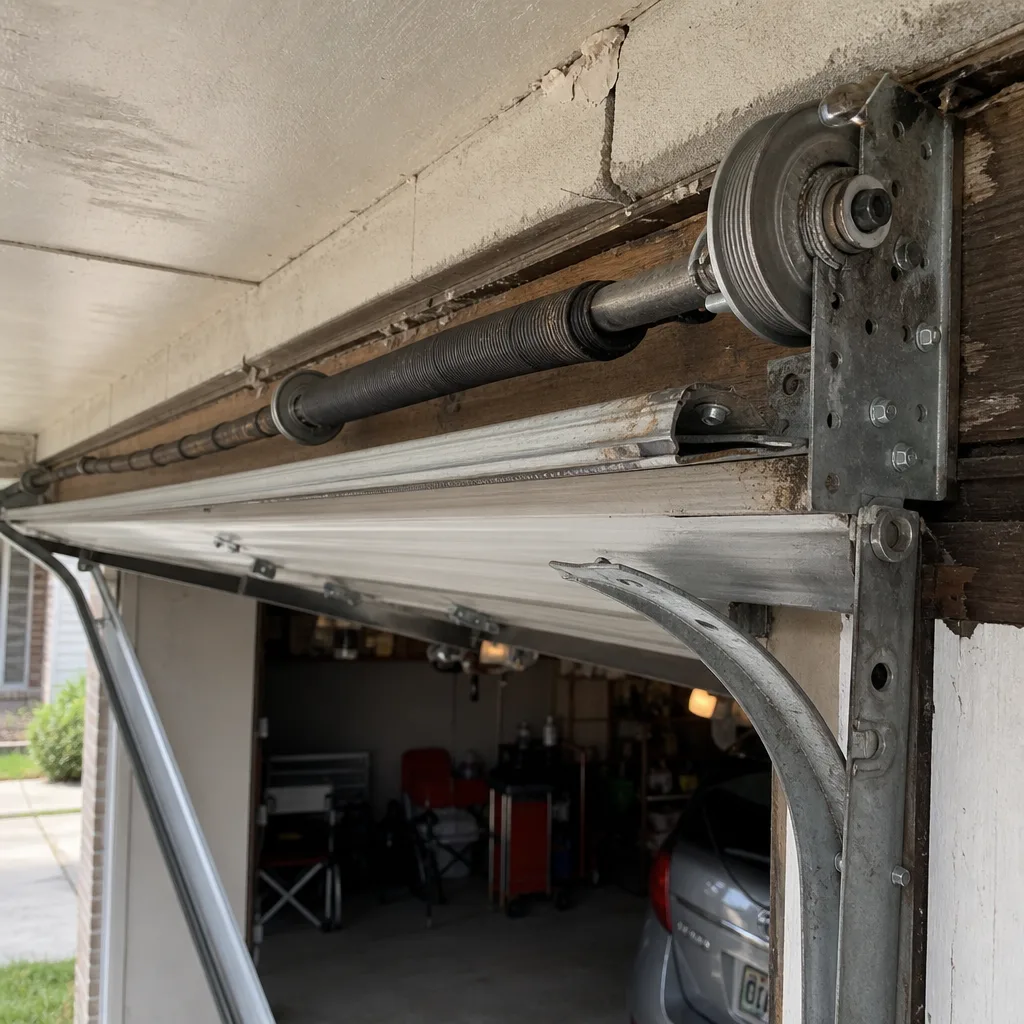 Before
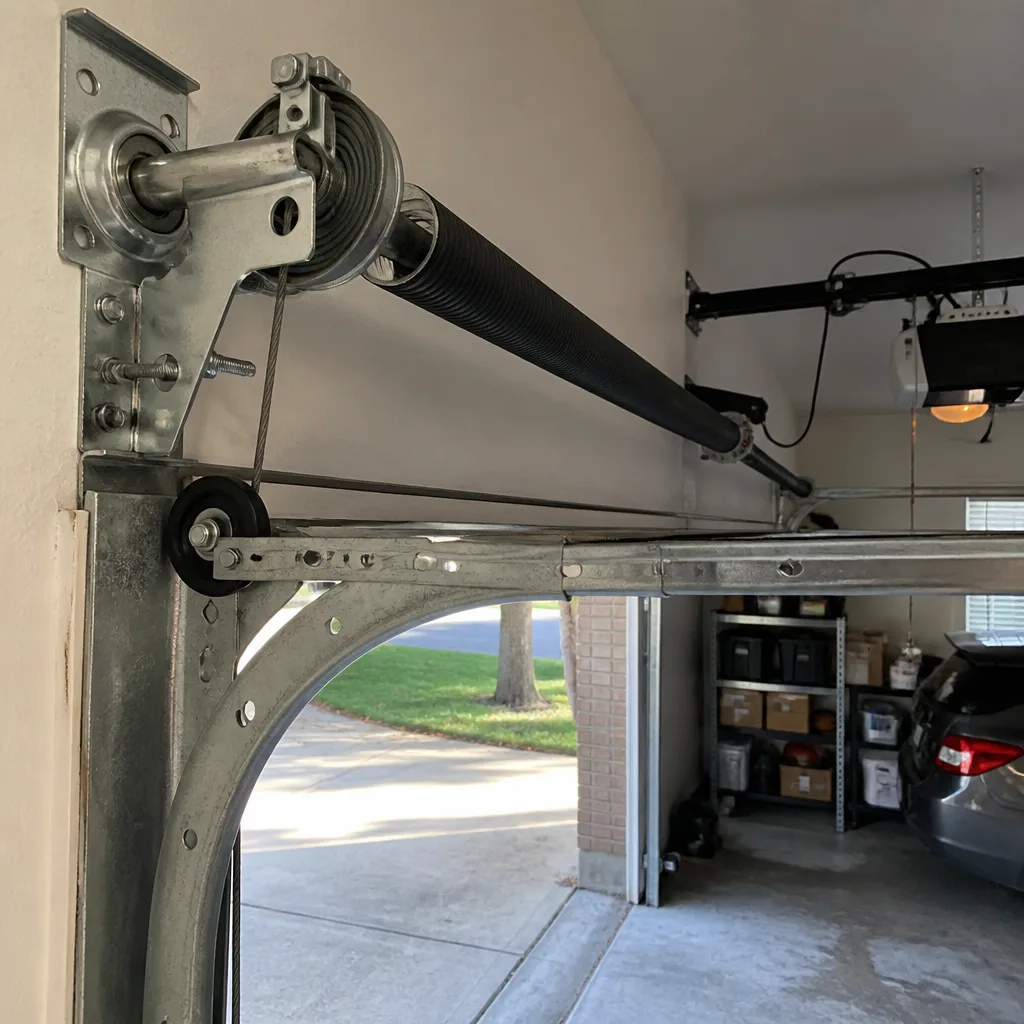 After
After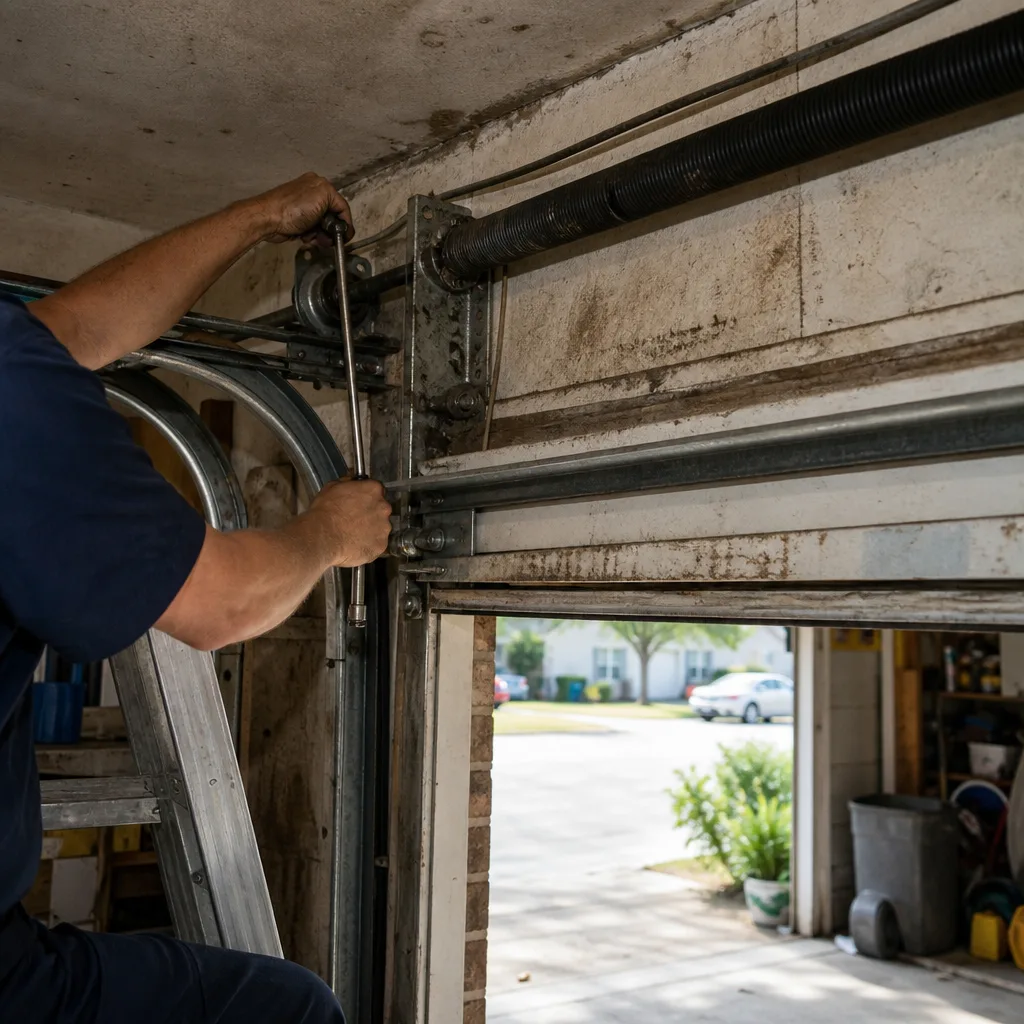 Before
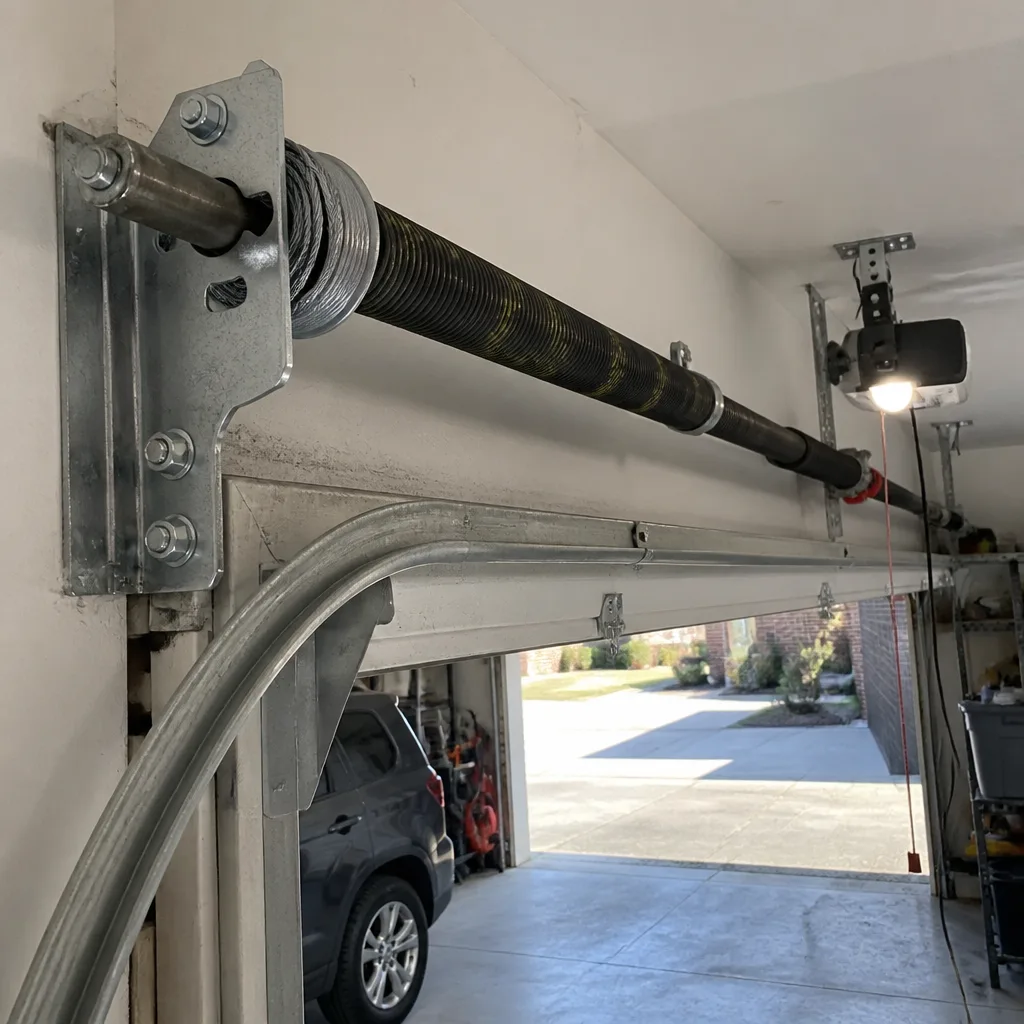 After
AfterGarage Door Warning Signs: A Humble Homeowner’s Reference Guide
Most garage door failures brew for two to four weeks before anything actually breaks. In that window, your door tells you exactly what’s wrong - through the pitch of a squeal, the angle of a bow, the pattern of rust along the bottom panel. The problem is that most warning-sign guides are written by people who’ve never taken a service call in Humble, so they list symptoms without telling you which ones mean “schedule a tune-up” and which ones mean “stop using this door tonight.” This guide - like our Complete Guide to Garage Door in Humble - works backward from the repair calls that actually come into a local shop on a Tuesday afternoon in Humble. Once you know these signs, you’ll catch the problem when the fix is a $40 spring adjustment instead of a 9 p.m. emergency call.
Quick Answer
Watch for uneven movement (one side higher than the other), a door that reverses on its own, loud grinding or popping from the roller tracks, and a bottom panel that leaves daylight gaps on one corner. If the door sags or drops when released from the opener, the springs are fatigued. In Humble, rust on the bottom panel and a gap under one corner are the most common pre-failure signals, driven by humidity and clay soil movement - both covered in our Seasonal Garage Door Care for Humble: Year-Round Homeowner’s Guide.
Table of Contents
- The Audio Checklist: Sounds That Name the Problem
- Visual Tells Specific to Humble’s Climate
- The Balance Test: A 60-Second Spring Check
- The Manual Release Check: Spring, Cable, or Opener?
- Call This Week vs. Call Right Now: The Safety Distinction
- The Gap Pattern: What Your Slab Is Saying Through the Door
- Common Mistakes to Avoid
- When to Call a Professional
- Frequently Asked Questions
- The Bottom Line
The Audio Checklist: Sounds That Name the Problem
A garage door that’s running healthy makes a low, even hum. When a sound changes pitch, develops a rhythm, or picks up a metallic edge, the door is telling you which part is failing. The key is not just what the sound is but when in the cycle it happens. A pop at the top of the arc is a different animal than a pop at the bottom. Here’s the breakdown of what we hear on service calls in Humble, and what each sound means.
Grinding or gravel-in-the-track sound
If the door sounds like it’s dragging a bag of gravel through the track, you’ve almost always got one of two things: worn-out rollers or a track that’s worked itself out of alignment. In Humble, the humidity accelerates roller wear because the nylon or steel faces pick up grit from the air, and that grit becomes sandpaper. The fix is usually a roller swap - cheap if caught early - but if the track has been scraping for weeks, the metal can be gouged, and then you’re looking at track replacement or realignment. Listen for whether the grinding is constant or rhythmic. Constant grinding points to the track; a grind that pulses with the door’s movement points to a single bad roller.
Squealing that rises in pitch
A squeal means metal on metal without enough lubrication, and it’s usually the rollers or the hinges. Left alone, the squeal gets sharper and turns into a shriek, and then the roller seizes and starts to flat-spot. Once a roller flat-spots, it doesn’t roll; it skids, and the skidding chews up the track. The good news: this is the easiest early catch on the list. A grease-free graphite touch on the hinges and a roller inspection solves it before it costs real money. The bad news: by the time most homeowners call, the squeal has been there for three weeks, and at least one roller needs replacing.
Popping from the rollers area
There’s a sharp, almost metallic pop that happens when the door passes a certain point in the track and it repeats at the same spot every cycle. That’s a roller jumping a rough or dented section of track. It can also be a cable catching on a worn drum. Either way, the pop is the door saying something is misaligned, and every cycle makes the wear worse. This is not a “wait and see” sound because the next step in the progression is a roller leaving the track entirely, and a door that’s off one track can fall diagonally and twist the panels.
Banging or thumping
A banging sound, especially near the end of the closing cycle, usually means the door is hitting the ground too hard because the travel limits on the opener are off, or the springs have lost enough tension that the opener is fighting gravity and slamming the final few inches. We also hear a thump from the opener itself when the belt or chain is loose. The diagnostic question is whether the bang sounds like it’s coming from the bottom of the door or the ceiling. Bottom of the door equals limits or springs. Ceiling equals the drive belt or chain. Both deserve attention, but the spring-related bang, if ignored, accelerates spring failure - and that’s the call you don’t want to make at 9 p.m.
Our advice: stand in the garage and run the door once, listening with the door open. The acoustics change when you’re standing beside the track versus in the driveway. Humble garages tend to be attached and enclosed, which amplifies the higher-pitched sounds. You’ll hear a roller problem inside a Humble garage weeks before you’d notice it from the driveway.
Visual Tells Specific to Humble’s Climate
Humble’s humidity and rainfall don’t just affect the door’s appearance - they telegraph exactly which part is about to fail. Other parts of the country can ignore a little rust. In Humble, rust on a door panel is a countdown, not a cosmetics issue. Here’s what to look for.
Rust patterns that matter
Rust on the bottom panel, concentrated along the edge, means water has been wicking into the panel from the ground. The bottom weather seal has likely failed or compressed, and every rain event in Humble feeds water into the seam. When the bottom panel rusts through, the door’s structural integrity drops, and the panel can buckle mid-cycle. That buckling bends the track and, in the worst cases, binds the door so hard the opener burns out trying to move it. There is a very different pattern - light surface rust across the face of the panels - and that’s mostly cosmetic in the short term, but it still means the factory paint has failed. A door with failed paint is a door that will rust through eventually. In our climate, “eventually” is sooner than you’d expect.
Seal separation: the footer and the weatherstrip
Walk out to the driveway and run your hand along the bottom of the door, especially at the corners. If the rubber footer has pulled away from the aluminum retainer - or if you can see light between the seal and the concrete - that gap is doing more than letting in mice and water. It’s also changing how the door loads when it closes, because the seal acts as a cushion. Without it, the door slams harder, which jars the rollers and hinges. And for homeowners in Humble, that gap is an invitation to every summer storm: water collects at the bottom of the door opening, sits against the panel, and soaks upward. The fix is a new bottom seal - quick and cheap. The mistake is waiting, because wet panels rust from the inside out, and you won’t see it until it’s gone.
Panel bowing: the frame’s early warning
Stand back and look at the door from the street - down the plane of the panels, not straight on. If there’s a gentle curve or a bulge, something is forcing the panel out of shape. The usual culprit in Humble is repeated rain/humidity cycles expanding the panels while old springs hold too much tension, or a weak frame that’s letting the door flex. A bowed panel won’t seat correctly against the weatherstrip, which makes the seal problem worse, which lets in more water, which worsens the bow. It’s a loop, and the only way out is to address the spring tension and the panel at the same time. If you catch a bow early, a spring adjustment can relieve the panel. If you wait until the bow is permanent, you’re replacing a panel or a whole door.
A note specifically for Humble homeowners: our clay soil expands and contracts with the rain, and that pushes the garage slab and the side jambs in ways that show up as visual panel gaps before they show up as mechanical failure. If one side of the door shows a thumb-wide gap at the jamb when it’s closed, but the panel itself looks straight, that’s a frame issue, not a door issue - and it’s worth checking before you spend money on door parts. You can read a deeper explanation in Garage Door Repair in Humble.
The Balance Test: A 60-Second Spring Check
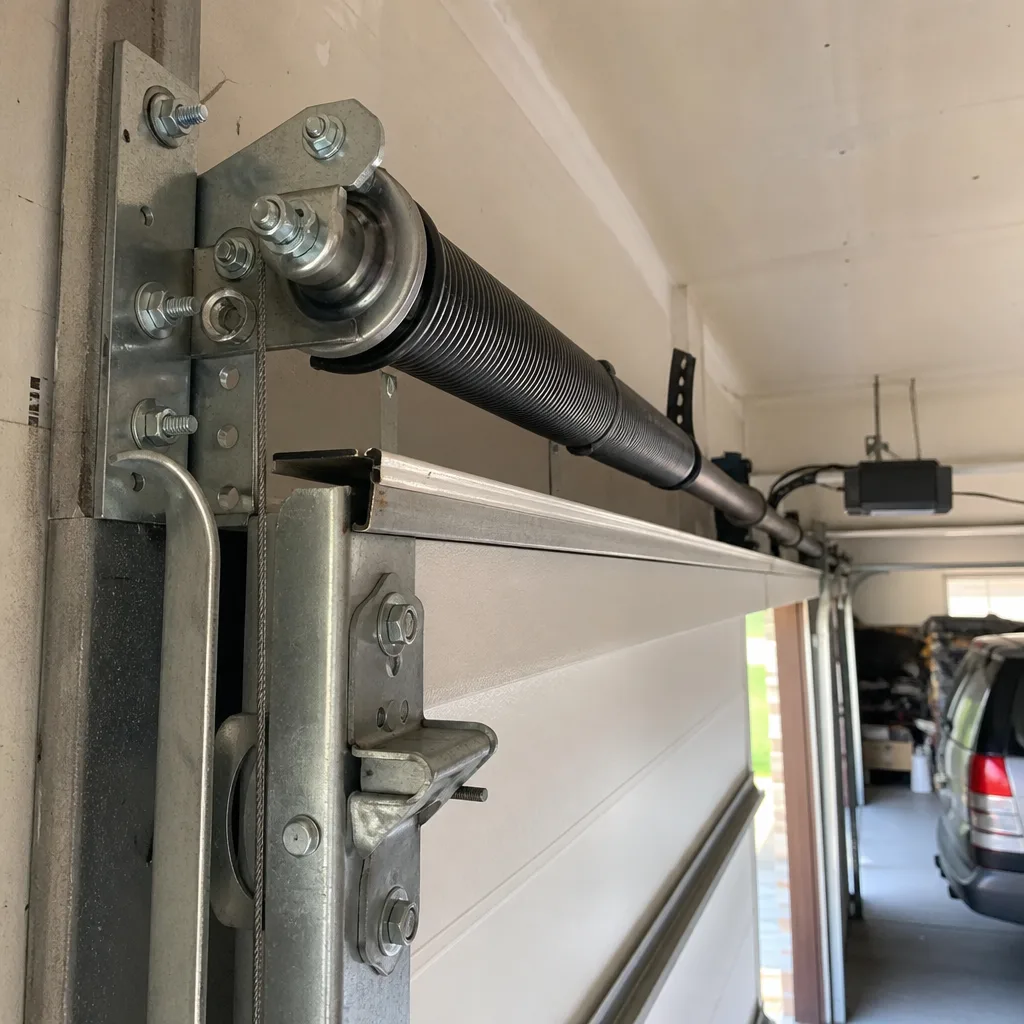
Your garage door is a 200-pound assembly riding on two springs. The springs do the lifting; the opener is really just a trigger. If the springs are healthy, the door should feel almost weightless when you lift it by hand. If it doesn’t, your springs are losing tension, and the opener is doing work it was never designed to do. Here’s the test we walk Humble homeowners through over the phone before we even come out.
The step-by-step balance test
- Close the door completely.
- Pull the red emergency release cord on the opener rail. This disconnects the door from the opener carriage. The door will now move manually.
- Lift the door with one hand from the handle, not from the bottom edge. Lift it to about waist height, around three feet, and let go.
- Watch what the door does.
What the results mean:
- Door stays put at waist height: Springs are healthy and balanced. The opener is working with a proper load. This is the result you want.
- Door drops or sinks fast: The springs have lost tension. The opener has been holding the full weight, which shortens opener life and increases the chance of a broken spring.
- Door rises on its own: The springs are too tight. This means someone over-tightened them in the past, and the door will slam open, putting stress on the hinges and the top panel.
- Door is heavy to lift at all: One of the two springs has likely snapped, or the cables are binding. Lower the door carefully if you’ve lifted it, and don’t operate it again until it’s looked at.
If the door is heavy or drops, close it manually - carefully - and call. A heavy door on a good day becomes an unholdable door the moment a spring snaps, and a snapped spring in a Humble garage is the reason we answer the phone at nine at night. Otto counts spring cycles like you count tire miles; he can tell you how much life is left on yours. He can also quote the job on the phone and hold that number when he gets there - no revised price at the door.
One caution before we go further: torsion springs hold enormous stored tension, and they can release it instantly. Since you’re reading this guide, you’re already doing more than most homeowners ever do. That’s exactly when people get hurt - when they know just enough to try the repair and not enough to handle a spring under load. Don’t adjust or remove a spring yourself. Let a trained professional do that. The balance test is safe. The spring itself is not.
The Manual Release Check: Spring, Cable, or Opener?
The balance test tells you about the springs. But sometimes the door won’t move at all, or it’s jammed, and you need to know whether the problem is the opener, a cable, or a track issue before you spend money. The manual release check is the diagnostic that separates the three. Here’s how it works and what each finding points to.
- Close the door if it’s open, or keep it in whatever position it’s resting in if it won’t move. Pull the red release handle to disconnect the door from the opener.
- Attempt to lift the door manually. How does it feel?
- Door moves freely and smoothly by hand, but the opener won’t move it: The problem is the opener - likely a stripped gear, a broken belt, or a travel-limit issue. The door itself is fine. You can read more about opener-specific fixes in Garage Door Opener in Humble.
- Door is extremely heavy or won’t lift, but it’s not bound against anything: This is a broken spring. One spring has snapped while the other is still holding, and the door is now unevenly loaded. This is the classic “door suddenly won’t open” call we get in Humble.
- Door lifts a few inches, then jams hard, usually with a scraping sound: You’re looking at a misaligned track or a door that’s come off one cable. The door is wedging itself. Do not force it - forcing a wedged door bends the panels and twists the track.
- You see a cable hanging loose or frayed beside the vertical track: That cable needs replacement. The door is currently running on one side of the lift assembly, and the remaining cable is taking double load. Every cycle you run in this condition risks snapping the second cable and dropping the door catastrophically.
- Increasing squeak or grinding that’s gotten louder over the past month
- Door slightly heavier when released from the opener, but still stays at waist height
- Visible rust on the bottom panel that hasn’t eaten all the way through
- Weather seal that’s cracked or separated, with a small daylight gap at one corner
- Door reverses occasionally for no apparent reason
- Slow opener response, or a delay between pressing the button and the door moving
- One side of the door sags visibly lower than the other when open or closed
- You hear a loud crack or bang from the spring area, and the door now jerks or won’t move
- A cable is hanging loose, frayed, or visibly unwinding from the drum
- The door comes down fast on one side, or slams when it closes
- You see a gap between panels that wasn’t there before, or a panel is buckling
- The door fell off the track or wedged at an angle
- Gap under one corner, tight at the other three: One corner of the slab has dropped, usually the corner nearest the driveway. Water pools at that corner, and the bottom seal loses contact. This is the most common Humble pattern. It means the slab is settling, and for now the fix is a thicker bottom seal or a threshold strip. Long-term, the slab may need leveling.
- Tight at the corners, gap in the middle: The slab has heaved upward at the edges - a classic clay-soil signature. The center of the slab sits lower than the edges, and the door seals at the sides but not the middle. This one’s harder to correct with a seal because the slab curvature is creating the gap.
- Gap that changes with the season: Tight in summer, gap in winter - or vice versa. That’s active clay movement, and it’s normal for Humble. The door itself isn’t failing; the ground under it is breathing, and the door frame is moving with it. The right response is a flexible, heavy-duty bottom seal that can compress and expand, not a “fix” to the door.
- Lubricating a grinding door without finding the cause. Spraying WD-40 on a grinding track quiets the symptom and hides the problem, and the roller or track keeps wearing. Proper garage door lube doesn’t fix a flat-spotted roller - it just makes the flat spot quieter for a week.
- Ignoring the balance test because the door “opens fine.” Most opener motors fail because they’ve spent months lifting a door the springs should have been lifting. The door opens fine right up until the opener burns out, and then it’s a $400 part plus the spring repair you deferred.
- Tightening the travel limit to close a gap. The door appears to seal better, but the springs and opener now carry a new constant load, and the slab issue that created the gap is untouched. This mistake shortens the life of everything attached to the door.
- Replacing the opener when the real problem is the springs. We hear this constantly: a homeowner replaces the opener, and the door still strains, because the springs were the issue. The opener is the most replaced part in a garage door system that didn’t need replacing. If you’re not sure, ask before you buy.
- Waiting until the door is completely dead to call. The emergency fee exists because emergency calls are expensive to run. Most “sudden” failures in Humble had a two-week warning period. Catch it on day three, and the same repair costs a daytime service call instead of an after-hours one.
- Trusting a verbal quote from a national outfit. A phone quote from a call center isn’t a quote - it’s a range, and the range always expands at the door. If the person you’re talking to isn’t the person who will stand in your driveway, the number isn’t final. A local shop can be held to its word because the owner lives in the same county you do.
The manual check works because it separates what’s wrong into either the opener or the physical door. Most national outfits won’t walk a homeowner through this on the phone. If you call us, you’ll get a live person who will ask these same questions and can usually tell you over the phone what the likely fix is and roughly what it’ll cost. That’s the way Otto’s run it since 2004 - quote on the call, hold the number at the door.
Call This Week vs. Call Right Now: The Safety Distinction
Not every warning sign is an emergency, and treating them all the same leads to two bad outcomes: homeowners panic and overpay for emergency service on a minor issue, or they ignore a serious one because the door “still works.” The distinction that matters is whether the failure mode is gradual or sudden. A gradual failure gives you days or weeks. A sudden failure gives you seconds, and a 200-pound door.
Call this week (graudal failures)
These are the calls we’d rather you make early. These are the $40 roller swap and the seal replacement and the travel-limit adjustment instead of the $400 spring cluster or the $1,800 panel replacement. Every one of these gets worse, but none of them drops the door on your car tonight.
Call right now and don’t run the door (sudden failure risks)
The difference is consequence. A sagging door is a broken spring, and the remaining spring is now holding a load it can’t sustain. When it lets go, the door drops. Same with a hanging cable - you’re one cycle away from a full release. If any of these show up, close the door manually if it’s open, leave it alone, and call. We answer 24/7, and yes, that means nine at night when the spring lets go and your vehicle is sealed inside. Otto will tell you on the phone what you’re dealing with and what it’s going to cost before he puts the truck in gear.
One more distinction: do not try to hold the door or prop it open if it’s in a sudden-failure state. A propped door looks stable and isn’t. The safest move is to leave it where it is, even if that means your car stays in the garage overnight. Better a missed morning than a pinched hand or worse.
The Gap Pattern: What Your Slab Is Saying Through the Door
A door that works fine but leaves a triangular gap at the bottom is the most quietly useful warning sign in the book, because it’s not telling you about the door at all. It’s telling you about the concrete under it. In Humble, where the soil is expansive clay, slabs move with the rain. The garage slab is the first thing to shift, because it’s the thinnest pour on the property and it’s sitting closest to the surface moisture. When the slab shifts, the door no longer meets the floor evenly, and the gap pattern tells you exactly how the soil is moving.
Here’s the pattern language, from the calls we see in Humble:
The mistake homeowners make is adjusting the door to close the gap. They tighten the travel limit so the door pushes harder against the floor, which masks the problem but adds strain to the opener and the springs. A better move is to note the pattern, check the condition of the bottom seal, and call if you’re seeing light. If you want a straight answer on whether the gap is a simple seal issue or a structural one, Otto’s Garage Door home has the contact info, and a phone call costs nothing.
Common Mistakes to Avoid
When to Call a Professional
Any of the “call right now” signs above is a professional call, not a DIY afternoon. So is a door that fails the balance test, a cable that’s frayed, or a track that’s visibly bent. Torsion springs, cables, and drum assemblies are under extreme tension, and the injuries from a failed spring are not a matter of being careful - the force scales beyond what a wrench and caution can control. If you’re seeing one of the early warning signs and the door still works, that’s the best possible time to call, because the repair is small and the price is lower. Not sure who to hire? Read How to Hire a Garage Door Contractor in Humble: A Step-by-Step Guide first. Otto’s Garage Door offers free estimates in Humble - call (281) 826-5240, get a live person, and get the number before we show up.
We also carry all the parts on the truck for the common repairs, so most jobs in Humble are done in a single visit. If you already have a written estimate from another company, bring it - we’ll do a free second opinion, no trip charge inside the county. And if you’re in the market for a full replacement rather than a repair, see Garage Door Installation in Humble for what that involves.
Frequently Asked Questions
The first sign is almost always a change in balance - the door feels heavier when you release it from the opener, and it won’t stay at waist height on its own. You may also hear a soft creak from the spring itself, but the balance test is the tell. Call (281) 826-5240 if the door fails that test; it’s a free conversation and a straight answer.
A slamming door usually means the springs have lost tension and the opener is lowering the door faster than it can control. The close-force limit or travel limit may also be off. The slam is damaging the hinges, rollers, and bottom panel. This is a “call this week” item, not a “disconnect the opener and live with it” item.
Not necessarily, but the type of noise matters. A constant, low hum is normal. A squeal, a grind, or a rhythmic pop means a specific part is wearing. The earlier you address a noisy door, the more likely the fix is a lubrication and a roller inspection rather than a track or opener replacement.
Most common repairs in Humble - roller swaps, seal replacement, travel-limit adjustments - run in the range of $75 to $225. Spring replacement typically runs higher because both springs are usually replaced as a pair. Every job is quoted before work starts, and the price quoted is the price on the invoice. Senior and veteran discounts apply, and there’s $40 off any repair over $200. For an exact quote, call (281) 826-5240 - estimates are free.
Yes, and that’s exactly why a broken spring warrants stopping use of the door. The cables are connected to the springs through the torsion assembly, and when a spring lets go, the tension that holds the door balanced is gone. Gravity does the rest. A door that’s mid-cycle during a spring failure can drop fast enough to injure someone underneath it. Don’t run a door with a suspected broken spring.
We service and repair all the common brands you’ll find on Humble garage doors, including LiftMaster, Chamberlain, Genie, Clopay, Amarr, Wayne Dalton, Craftsman, and Raynor. If you’ve got an oddball or older brand, call anyway - a live person answers, and if it’s a door, we’ve probably worked on it. The number is (281) 826-5240.
The Bottom Line
A garage door warns you in audio, in rust, in balance, and in gap patterns. The trick is knowing which signal is early and which one is late. Early signals are cheap to fix and easy to schedule. Late signals mean emergency calls and bigger invoices. If you run the balance test and the manual check once a month - it takes two minutes total - you’ll catch nearly every failure before it strands you. And when you do see something off, you’ve got a local shop in Humble that’ll answer the phone, tell you what it is, and charge the number it quoted before you ever see the truck. For more guides & resources, visit our blog.
Written by Otto Reinhardt, Owner at Otto’s Garage Door, serving Humble since 2004.