

Last updated September 10, 2026
Full 25-point door and opener safety check with every visit - springs, cables, rollers, tracks, and your LiftMaster or Chamberlain opener included
You get a price before we start. It does not change when the truck arrives.
 Before
 After
After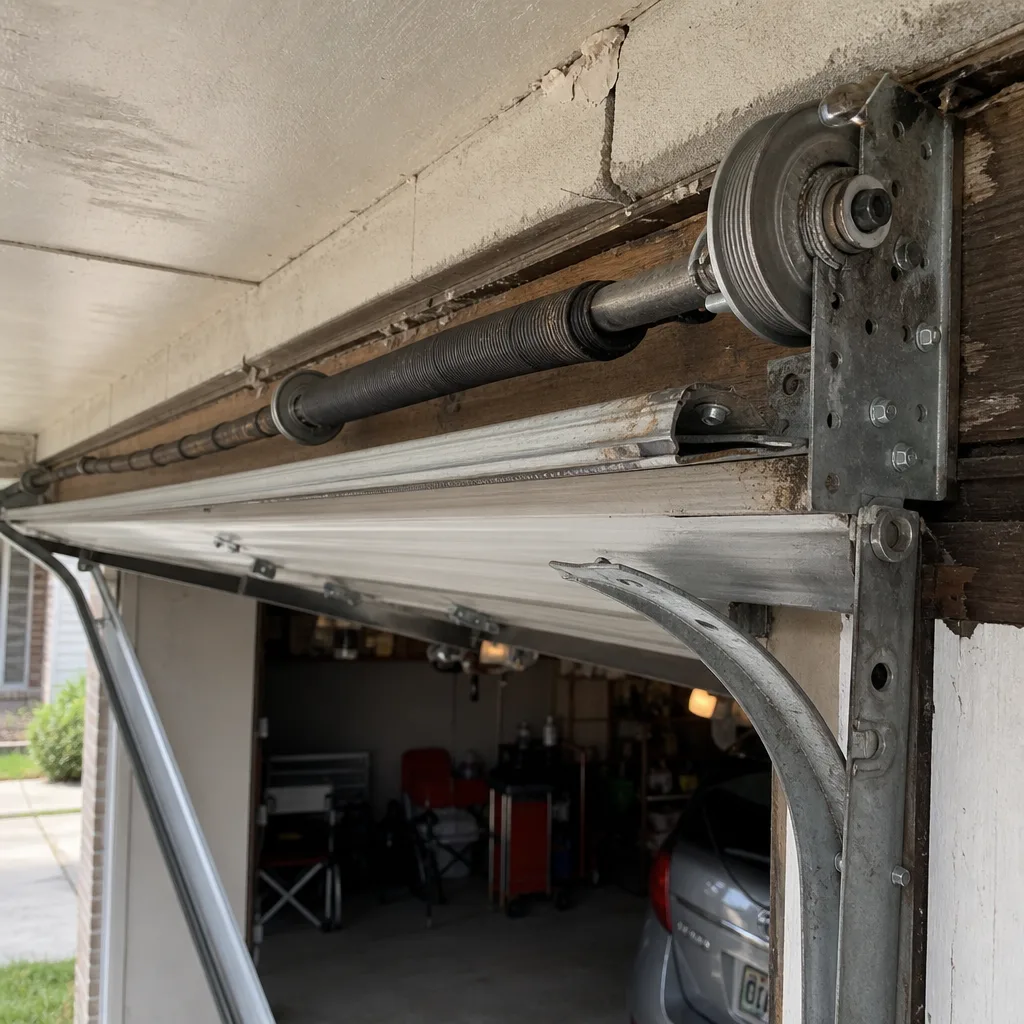 Before
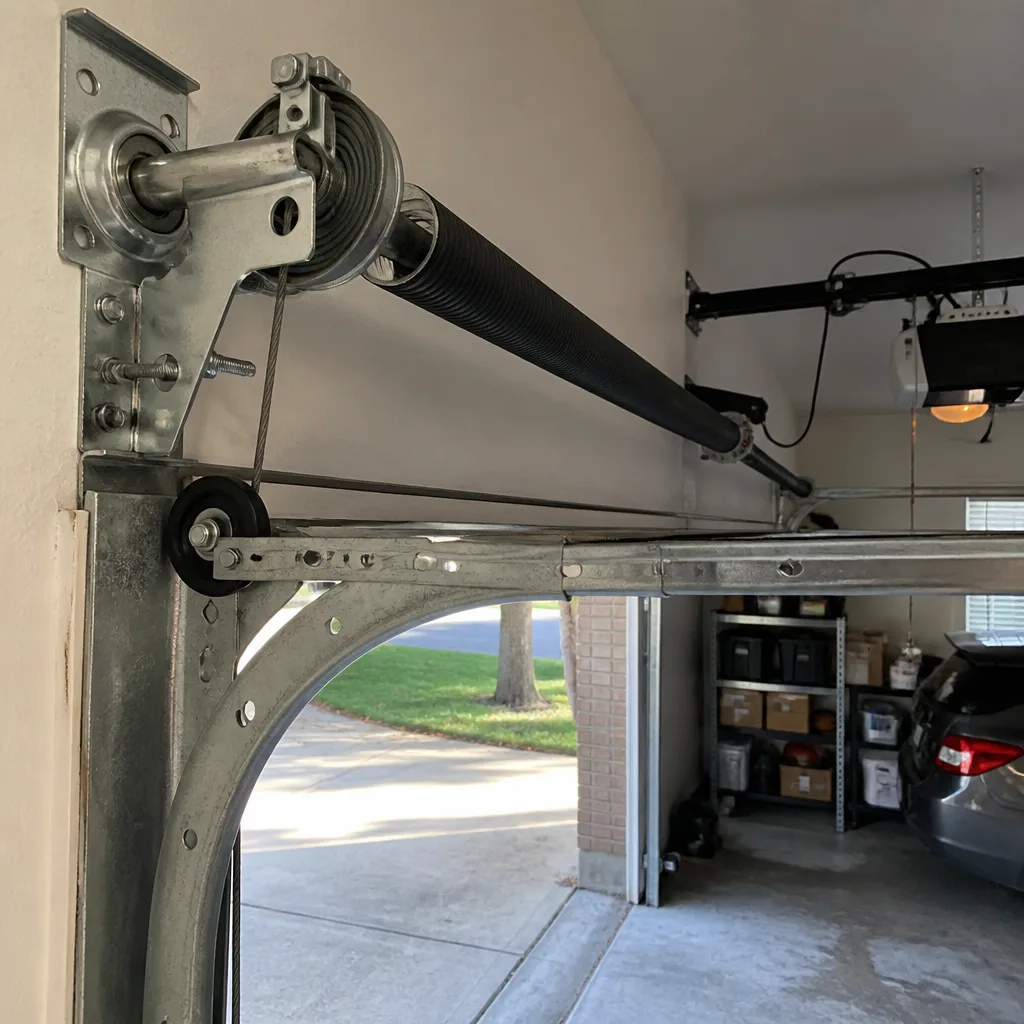 After
After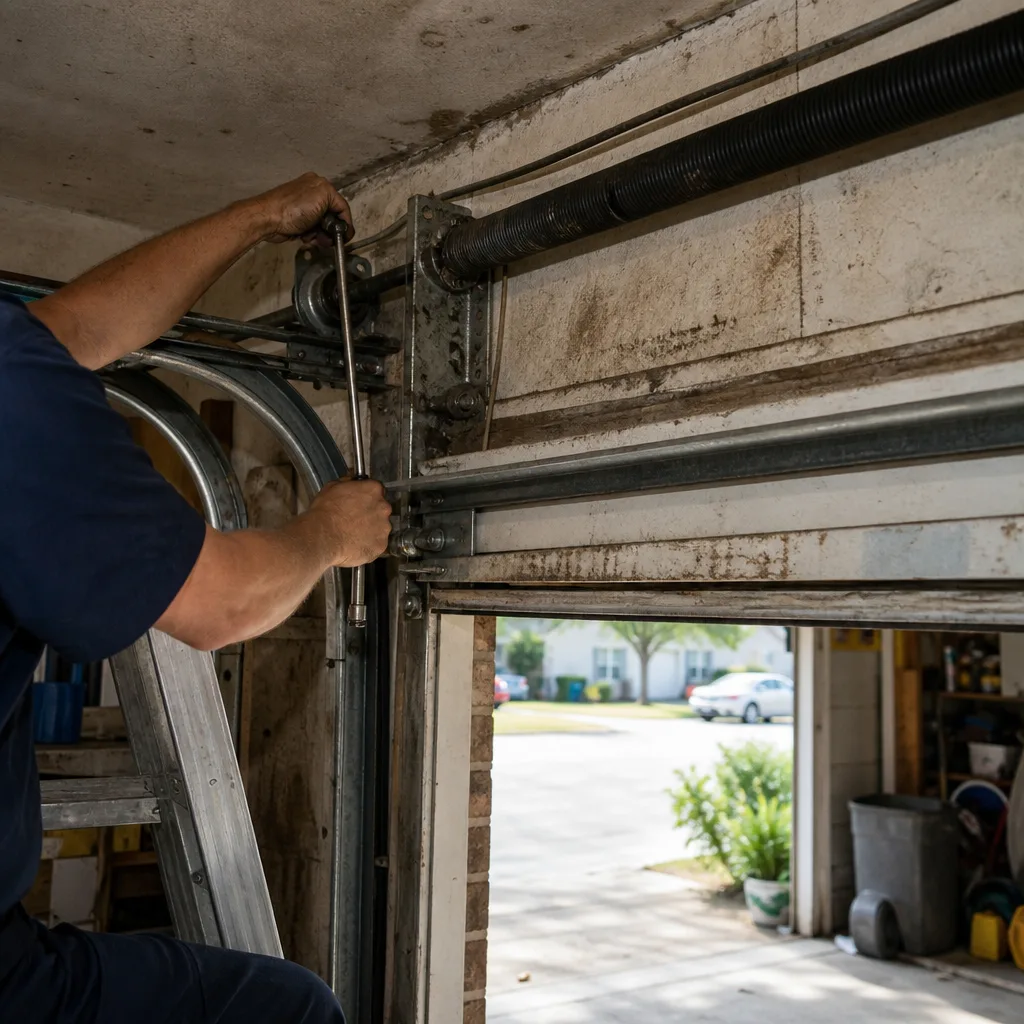 Before
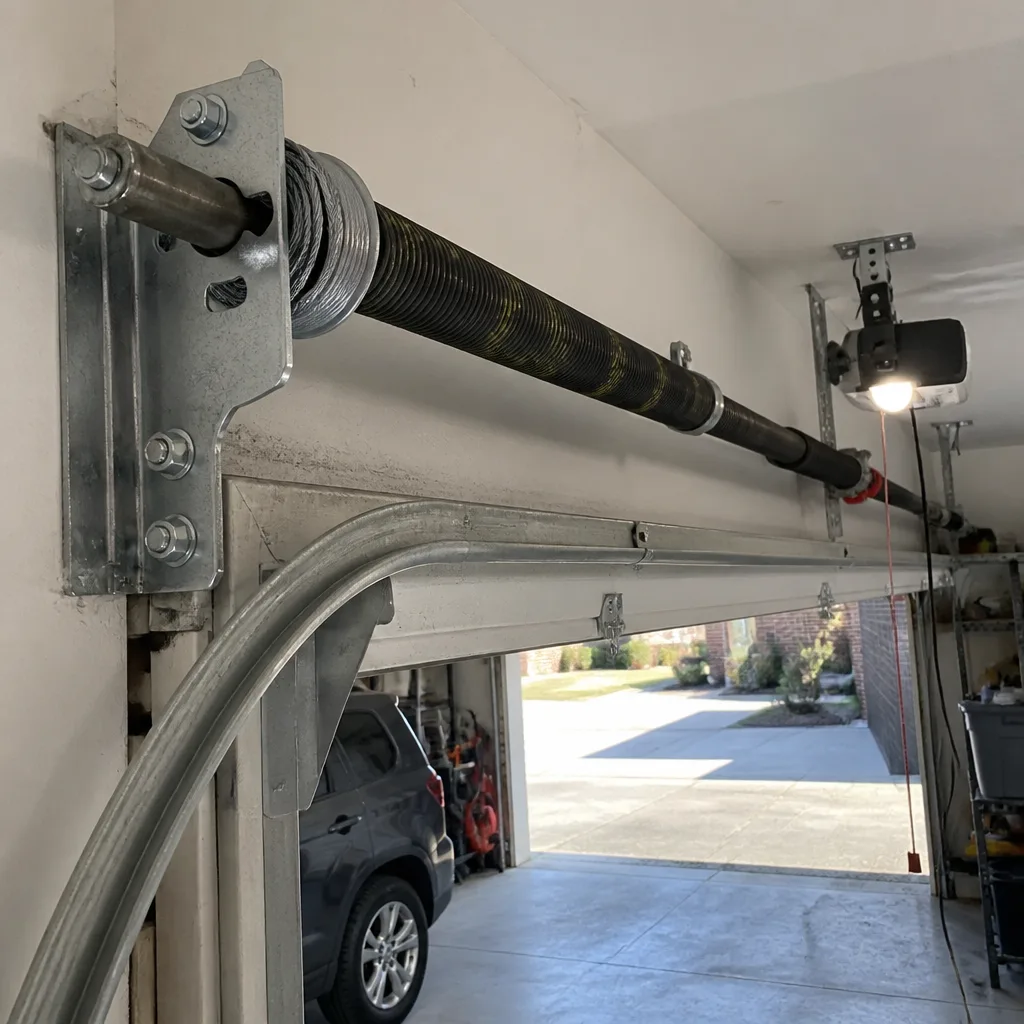 After
AfterGarage Door Repair Maintenance Checklist for Humble Homeowners
October is Otto’s busiest month. Not because garage doors suddenly decide to fail when the calendar flips, but because summer in Humble spent four months quietly doing damage. The heat baked the grease out of the rollers. The humidity swelled the wood and attacked the steel. The afternoon thunderstorms drove water under the bottom seal and into the track brackets. By the time October rolls around, that door you haven’t touched since March sounds like a shopping cart with a bad wheel, and now you’re on the phone with someone like me. This checklist is built from twenty years of service calls in Humble, Texas, and every item on it is here because I’ve watched a homeowner skip it and pay for it later. You’ll get a month-by-month plan tied to our actual Gulf Coast seasons, not some generic four-season template written for Minnesota, plus the exact lubricant I use and why the stuff at the big-box store is wrong for our humidity.
Quick Answer
A garage door maintenance checklist for Humble homeowners should include monthly visual inspections of rollers, cables, and track alignment, lubrication twice a year with a synthetic lubricant suited to high humidity, a bottom seal check before spring storms, and a fall tune-up before cooler weather changes how the metal behaves. Most Humble doors need about 20 minutes of attention four times a year. Skip it, and you’ll replace springs at year 7 instead of year 12, and you’ll replace the whole door at year 15 instead of year 25.
Table of Contents
- Why Humble Doors Fail Differently Than Doors Anywhere Else
- The Month-by-Month Maintenance Map for Humble
- The Five-Minute Visual Inspection That Catches 80% of Problems
- Lubrication: What Otto Uses and Why White Lithium Is Wrong Here
- The Bottom Seal and the Humble Rain Problem
- Frame Shift and Slab Movement: The Humble Problem Nobody Talks About
- What to Log and Keep in Your Garage Door Folder
- Common Mistakes to Avoid
- When to Call a Professional
- Frequently Asked Questions
Why Humble Doors Fail Differently Than Doors Anywhere Else
A garage door is 200 pounds of steel, wood, or aluminum riding on two springs and a handful of cables. Respect it. But here’s what most maintenance guides miss: a door in Humble isn’t fighting the same fight as a door in Dallas or Denver. We sit at about 90 feet above sea level with humidity that regularly hits 90 percent from May through September. The soil under most of Humble is expansive clay that shrinks in drought and swells after a week of rain. Your slab moves. Your door frame moves with it. And your door, which was perfectly aligned when it was installed, slowly gets pulled out of square. That’s why a Humble door can be perfectly maintained mechanically and still bind, scrape, or refuse to close flush. The maintenance checklist that ignores where you live is just noise. This one is built around the failure patterns I’ve logged in this county since 2004.
We see three seasonal spikes in service calls. October, as I said, is the big one. February brings a smaller spike when cold fronts make old springs brittle and snap. And late May through June brings calls about doors that won’t close after storms, almost always because the bottom seal got torn or the track got knocked out of alignment by wind or debris. For Garage Door Warning Signs: A Humble Homeowner’s Reference Guide, see our detailed post. If you want to avoid being one of those calls, the next section is your calendar.
The Month-by-Month Maintenance Map for Humble
A generic four-season checklist fails here because our seasons don’t match the textbook. We don’t have a dry season and a wet season so much as a long humid stretch and a shorter mild stretch. Here’s the schedule that actually matches Humble weather and humidity patterns, built from two decades of watching doors fail in this specific climate.
- January: After the first hard cold front, inspect both torsion springs for rust and hairline cracks. Cold snaps make metal contract and expose weakness. If you see rust streaks, mark it in your log. Lubricate hinges and rollers if you haven’t done it since fall.
- March: Check the bottom seal. Spring rains start compounding and water intrusion through a torn seal is the slow killer that rusts tracks and warps wood doors. Replace a torn seal now, before April storms arrive. This is also the time to check roller wear, because a sticky roller in March becomes a snapped cable in August.
- May: Full visual inspection on the whole system, including the opener chain or belt, the safety sensors, and the track brackets. Spring storms are kicking in and the humidity is climbing.
- June through August: Once a month, do the five-minute visual inspection below. Summer in Humble is when lubrication breaks down fastest and when doors expand enough to rub on the frame. You’re looking for anything that changed since last month.
- September: This is the big one. Do a full fall tune-up: lubricate everything that moves, check spring balance, re-tension if needed, inspect cables for fraying, and test the auto-reverse function. The humidity is still with us but the worst heat is breaking. A September service catches the summer damage before October makes it obvious.
- November: Test the opener’s force settings. Cooler temperatures mean the door moves differently, and an opener pushing too hard in cold weather can crack rollers or snap a cable. Verify that the reverse mechanism trips on a 2×4 laid flat.
This schedule adds up to maybe an hour of work per year if you do it yourself, plus two lubrication sessions. The alternative is the call I get on a Tuesday night in October when the spring lets go, and that call is always more expensive than an hour of looking. If you’d rather have someone else do the looking, our Garage Door Repair in Humble page walks through what a professional tune-up includes and what it costs in this area.
The Five-Minute Visual Inspection That Catches 80% of Problems
Most garage door failures don’t happen suddenly. They announce themselves for weeks or months first, and the only reason you don’t notice is that you’re not looking. This inspection takes five minutes and requires no tools. Do it monthly during the summer, and once a season the rest of the year. Here’s the plain-language version, in order.
- Stand inside, close the door, and just look at it. Does the door hang straight? Is the gap between door and frame even on both sides and across the top? An uneven gap means something shifted, and around Humble, that usually means slab movement or a failing spring.
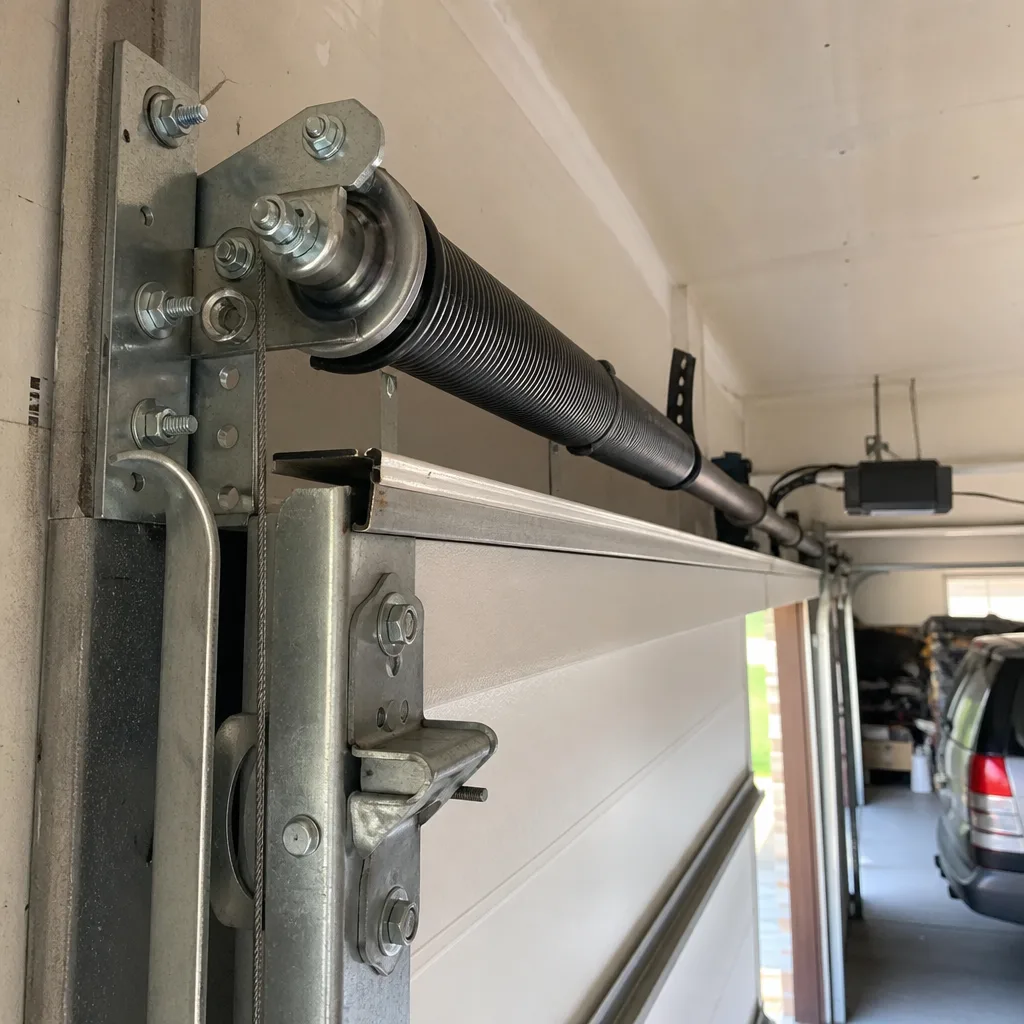
- Look at the springs. If you have a single wide spring across the top, look for any gap in the coil. A gap means the spring has snapped, and you need to stop using the door until it’s replaced. If you have two side springs, both should look the same. If one looks stretched or has a gap, call before you open the door again.
- Check the cables. On each side of the door, a steel cable runs from the bottom bracket up to a drum at the top. Run your eyes along both cables. You’re looking for broken strands, rust, or any place the cable looks loose instead of tight. A frayed cable under tension is a wait-to-happen, not a watch-and-see.
- Look at the rollers. Each roller should be round, not worn flat on one side, and should spin rather than slide. Move the door up and down once and listen for any grinding or a single roller that’s not turning. A seized roller will eventually carve a groove in the track.
- Check the track where the rollers run. The vertical track on each side should be straight and parallel to the wall. The horizontal track over your head should be level. If a track looks like it’s leaning or twisted, something pushed it, or the bracket that holds it has worked loose.
- Look at the bottom seal. Kneel down and look at the rubber strip along the bottom edge of the door. If you can see daylight under the door at any point, the seal is failing. You should not be able to slide a pencil under the door when it’s closed.
- Run the door. Open and close it once, and watch for any hesitation, jerk, or wobble. The door should move smoothly start to finish. If it shudders halfway up, something is binding. If it makes a loud bang at any point, that’s a spring or bracket problem, not a minor one.
That’s it. Seven looks, five minutes. If you find something wrong in step 2 or 3, have the door looked at before using it further. Springs and cables are the dangerous parts of a garage door system, and they fail under load. If you’re unsure whether something you saw is normal, call us at (281) 826-5240 and describe it. A live person answers, and I’d rather spend two minutes on the phone than have you standing under a door that’s about to drop.
Lubrication: What Otto Uses and Why White Lithium Is Wrong Here
Every garage door manufacturer recommends lubricating your door twice a year, but few tell you what to use, and the default advice from the hardware store shelf is often wrong for our climate. Standard white lithium grease is the most commonly purchased garage door lubricant in Humble, and it is the wrong call here. Here’s why.
White lithium grease is a grease, not a lubricating spray. It’s thick, it’s sticky, and it attracts dust. In a dry climate, that’s manageable. In Humble, where the air is water and the dust is fine clay, white lithium creates a paste that turns abrasive inside your rollers and on your hinges. It also dries out in heat faster than most people realize, so by August, the grease you applied in April is now a gummy film making your door work harder, not easier. The same goes for WD-40, which is a solvent and water displacer, not a lubricant. It cleans, then it evaporates, and it leaves the metal dry.
What we use on every Humble door is a straw-applied synthetic or silicone-based lubricant. I’ve used the same type for years: a spray with a thin carrier that penetrates into the roller bearing and hinge pin, then evaporates and leaves a lubricating film that doesn’t attract dust. You want a product designed specifically for garage doors, not a general-purpose spray. Look for a label that says garage door lubricant or dry lubricant, and avoid anything that says grease.
Here’s the lubrication routine, in order, twice a year. Once in September before the fall tune-up, and once in March as the humidity is starting to build.
- Unplug the opener or pull the release cord so you’re moving the door by hand. A moving door under power is a pinch hazard, and you want control.
- Apply lubricant to each roller. If you have metal rollers, lubricate the bearing where the roller meets the stem, not the wheel itself, which runs on the track. If you have nylon rollers, the nylon wheel needs no lubricant, but the bearing inside still does.
- Apply a small amount to each hinge pin, where the hinge halves pivot against each other.
- Apply lightly to the torsion spring. This keeps the coil surface from rusting and allows the spring to wind and unwind smoothly.
- Spray a thin coat on the latch and lock mechanism, if your door has one.
- Wipe off any excess. You want a film, not a drip.
- Re-engage the opener and run the door. It should be noticeably quieter immediately.
If you run this routine in March and September, your rollers will last years longer and your spring will cycle more smoothly. All of this applies whether your door is from Clopay, Amarr, or any other brand, and it applies equally to LiftMaster and Chamberlain openers on the operator side. The opener’s chain or belt needs its own occasional light lubrication if you have a chain-drive model, but never lubricate the opener’s motor or the inside of the rail on a belt-drive.
The Bottom Seal and the Humble Rain Problem
In a city that averages 50 inches of rain a year and gets it in sideways during spring thunderstorms, the rubber strip along the bottom of your garage door is not a cosmetic accessory. It is the thing that stands between your garage floor and a slow, constant rot. A torn bottom seal lets water under the door during every heavy rain, and that water does three things. It rusts the bottom brackets that hold the door panels together. It wicks into wood and causes swelling, which then causes the door to bind against the frame. And it creates a permanent damp patch in your garage that attracts every bug that lives in the Gulf Coast heat.
Here’s the Humble-specific check. After any rain event over two inches, go out to the garage and run your hand along the concrete where the door meets the floor. If the concrete is wet on the inside edge, the seal is failing, even if it looks fine from outside. The vinyl and rubber seals sold at most stores for Humble doors get brittle after three or four summers of heat and UV, and they crack at the corners first. You should replace the bottom seal about every three to five years on a south-facing door, and every four to six on a north-facing one. South-facing doors get direct afternoon sun on the seal for four months a year, and that UV exposure is the primary killer.
Replacement is a simple job on most single and double doors, but the method differs by brand. Clopay and Amarr use different bead profiles, so if you’re buying a replacement seal, match the profile to the door. If the old seal is so brittle that it’s breaking off in chunks when you try to remove it, that’s a job for a heat gun and patience, and if you’d rather not fight it in a 95-degree garage, we handle seal replacement as part of our Garage Door Installation in Humble work and as a standalone service call.
Frame Shift and Slab Movement: The Humble Problem Nobody Talks About
Here’s the failure pattern I see in Humble more than any other single issue, and it’s not in the door, the springs, or the opener. It’s under the concrete. The soils in this part of Harris County are heavy, expansive clay. When it’s wet, it swells. When it’s dry, it shrinks and cracks. Your garage slab rests on that soil, and over the years, it moves. A quarter inch of movement at the slab edge becomes a half inch at the top of the door opening. The door frame, anchored to the slab, moves with it. The result is a garage door that suddenly doesn’t seat in the opening the way it used to, even though nothing mechanical has failed.
Here’s how to check for it. Put a level against the vertical track on each side of the door. If the track is plumb and the door still binds, check the garage floor with a level across the threshold. If the concrete has developed a slope or a high spot you don’t remember, the slab has shifted. Look also at the gap between door and frame on each side. A door that’s visibly closer to the frame at the top than at the bottom is riding in a shifted opening.
This is not something you fix by adjusting the door. If the slab has shifted, the door has to be re-aligned to the new geometry, and that’s a job for someone who knows how doors unfold, bind, and fail under stress from a moving anchor point. The fix is often as straightforward as resetting track brackets and rebalancing the springs to the new travel path, but if you try to force the door into an old alignment with a no-longer-square frame, you’ll snap cables or burn out the opener. If you’re seeing this pattern on your door, call (281) 826-5240 and mention slab movement. I’ll look at the frame as well as the door, because around here, they’re never separate problems.
What to Log and Keep in Your Garage Door Folder
The next time you sell your house in Humble, the buyer’s inspector will look at the garage door for about four minutes. They’ll check that it opens, that it closes, and that the reverse mechanism trips. They will not know that you replaced a spring in 2021, that the opener chain was tightened in 2023, or that the bottom seal is two years old, because none of that is visible. If you keep a simple log, you have a service history that tells the next owner, the next technician, or the next you, exactly what has been done and when. This is the difference between guessing on a door and working on a door with a record.
Here’s what goes in the folder. A simple spiral notebook in the garage works fine, or a note on your phone. The key is that the record lives somewhere you’ll actually check.
- Date and description of every maintenance task you perform, including lubrication, seal replacement, and roller replacement.
- Date and details of any professional service, including the name of the company, what was done, and what it cost.
- Any readings or observations that change over time, like the level check on your slab or the wear pattern on a roller.
- Receipts for any parts you bought, with brand and model noted, especially springs and openers.
- Photos, if you take them, of track alignment or spring condition before and after service.
If you have a LiftMaster or Chamberlain opener, note the model number and the date of the last battery change in the wall control. If you have a drive-belt replacement or a circuit board repair, write it down. When the next technician arrives, they should be able to look at your folder and know the door’s history in ninety seconds. If that technician is me, it saves you money, because I’m not spending my first fifteen minutes trying to figure out what a previous owner may or may not have done. The Otto’s Garage Door home page has more on how we document our own work in writing, so your folder can match the invoice trail.
Common Mistakes to Avoid
- Using white lithium grease on rollers and hinges. It goes on thick, attracts Humble’s fine clay dust, dries into a paste in the summer heat, and makes the door work harder within a few months. Use a synthetic dry-lube spray instead.
- Ignoring a noisy door until the sound changes. A grinding sound is a roller seizing. A popping sound is a spring losing tension. By the time the sound gets bad enough to notice, the cheap fix is off the table and the expensive one is on the phone.
- Pushing the opener button harder when the door is slow. The opener has a motor, and that motor has a limit. If the door is struggling, the opener is not the problem; the door is. Adding a bigger opener to a binding door just burns out the new opener faster. This is one of the most common calls we get in Humble.
- Replacing only one spring when the other breaks. Springs wear in pairs. If one has failed, the other is at the same age and the same cycle count. Replacing one means paying twice for the same job within a year or two, and it means driving a door with an unbalanced spring system in the meantime.
- Painting over rust on the door bottom without treating the underlying metal. A surface coat holds moisture against the steel and accelerates rust in a humid climate. The fix is to sand the rust, treat the metal, then prime and paint. Or replace the panel section if the rust has gone through.
- Skipping the auto-reverse test because the door “works fine.” The reverse mechanism is the safety device that stops a 200-pound door from landing on a child, a pet, or a car. Test it monthly with a roll of paper towels or a 2×4 on the floor. If it doesn’t reverse, don’t keep using the door.
When to Call a Professional
Some garage door work is safe to do yourself, and some is not. Lubrication, visual inspections, bottom seal replacement, and opener battery changes are all reasonable homeowner tasks. But you should stop and call someone before doing work on any of these: torsion springs, which are wound under high tension and can release without warning; cables, which hold the same tension and can snap like a whip; track brackets that anchor the door to the wall or the ceiling, because a misaligned track under spring tension is a loaded weapon; and any electrical work on the opener beyond swapping the wall control or safety sensor batteries. A door is 200 pounds riding on two springs. Respect it. Otto’s Garage Door offers free estimates in Humble, and a live person answers the phone. Call (281) 826-5240 if you’re ever unsure whether something is safe or not.
Frequently Asked Questions
A professional garage door tune-up in Humble typically runs between $75 and $150 depending on the door type and what needs adjusting, and that price is quoted before any work begins and held at the door. At Otto’s Garage Door, the quote you get on the phone is the number on the invoice, and every tune-up comes with the 90-Day Done Right Promise in writing. Call (281) 826-5240 for an exact quote, and estimates are free.
Twice a year, in March and September, matching the humidity cycle in the Humble area where summer heat breaks down lubricant faster than most other climates. Use a synthetic or dry garage door lubricant, not white lithium grease or WD-40, both of which cause more problems than they solve in high-humidity conditions. If you hear any squeaking between scheduled lubrications, the door is telling you it’s dry and needs attention sooner.
The most common reason a door starts binding in Humble without any mechanical failure is slab movement from our expansive clay soil, which shifts the frame and throws the door out of alignment even when it was perfectly installed. Check the gap between door and frame for unevenness and put a level on the track to confirm the frame has moved. The fix is to re-align the door to the new frame geometry, and it’s a job for a professional, not a DIY adjustment.
Yes, on most doors a bottom seal is a straightforward replacement that takes most homeowners under an hour and requires only basic tools, provided you buy the right bead profile for your door brand. The seal should be replaced every three to five years in Humble, more often on south-facing doors where direct afternoon sun degrades the rubber faster. If the old seal is hardened and crumbled, or if the door is a Clopay or Amarr with a specialty bead, call (281) 826-5240 and we’ll replace it while we’re out.
The auto-reverse test, by a wide margin. It’s the cheapest, fastest check there is, and it’s the one that protects people, not just doors. Put a roll of paper towels or a 2×4 on the floor under the door and close it; the door should reverse within two seconds of contact. If it doesn’t, stop using the door until the opener is serviced, because that reverse mechanism is what stops the door from crushing whatever is underneath it.
Standard torsion springs in Humble last about 10,000 cycles, which for most homeowners works out to seven to ten years, though the heat and humidity in this area can shorten that slightly. If your springs are seven years old or older and the door is getting heavier to lift by hand, you’re on borrowed time. Springs are dangerous to replace yourself; call (281) 826-5240 and have them done by someone who does it every week.
The Bottom Line
A garage door in Humble is a machine living in a hostile environment: 90 percent humidity, summer heat that bakes the lubricant off, afternoon storms that drive water under the seal, and clay soil that shifts the foundation out from under the frame. The maintenance that keeps a door like that running isn’t complicated, but it is specific. For more guides & resources, visit our blog. Do the five-minute visual inspection monthly in summer. Lubricate in March and September with the right product. Check the bottom seal after big rains. Keep a simple service log. And when you hit something that involves springs, cables, or a frame that’s moved, pick up the phone. Twenty years in this county has taught me one thing about garage doors: the homeowner who looks at the door twice a year never needs me at nine o’clock at night. The one who doesn’t, called me last Tuesday.
If you want a professional to do this checklist for you, or if you’ve found something on your inspection that needs attention, call Otto’s Garage Door at (281) 826-5240. A live person answers, the quote on the phone is the price on the invoice, and the 90-Day Done Right Promise is written on every job. We’ve been servicing garage door openers in Humble and the surrounding county since 2004, and if you’re ever in doubt about whether your door is safe, call us before you use it again. We’d rather tell you it’s fine than have you find out it isn’t.
Written by Otto Reinhardt, Owner at Otto’s Garage Door, serving Humble since 2004.