

Last updated September 10, 2026
Full 25-point door and opener safety check with every visit - springs, cables, rollers, tracks, and your LiftMaster or Chamberlain opener included
You get a price before we start. It does not change when the truck arrives.
 Before
 After
After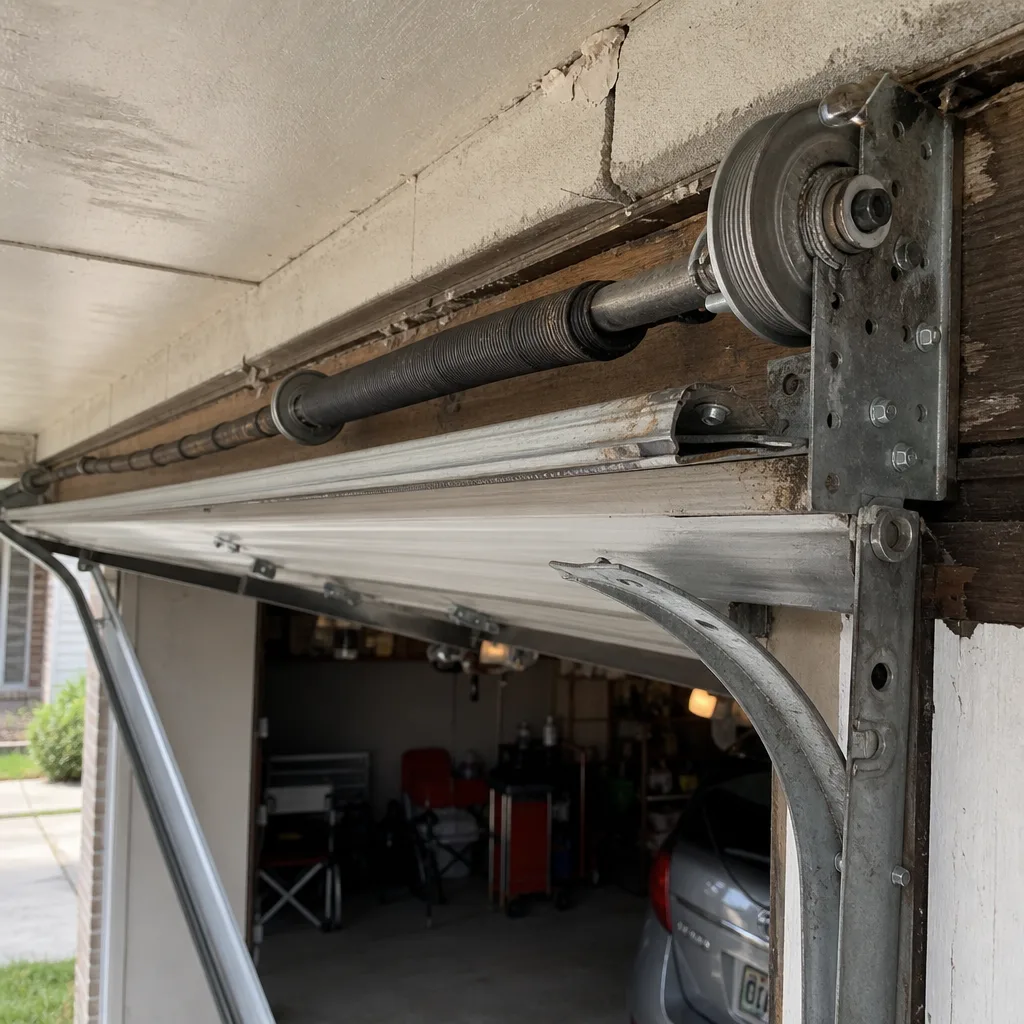 Before
 After
After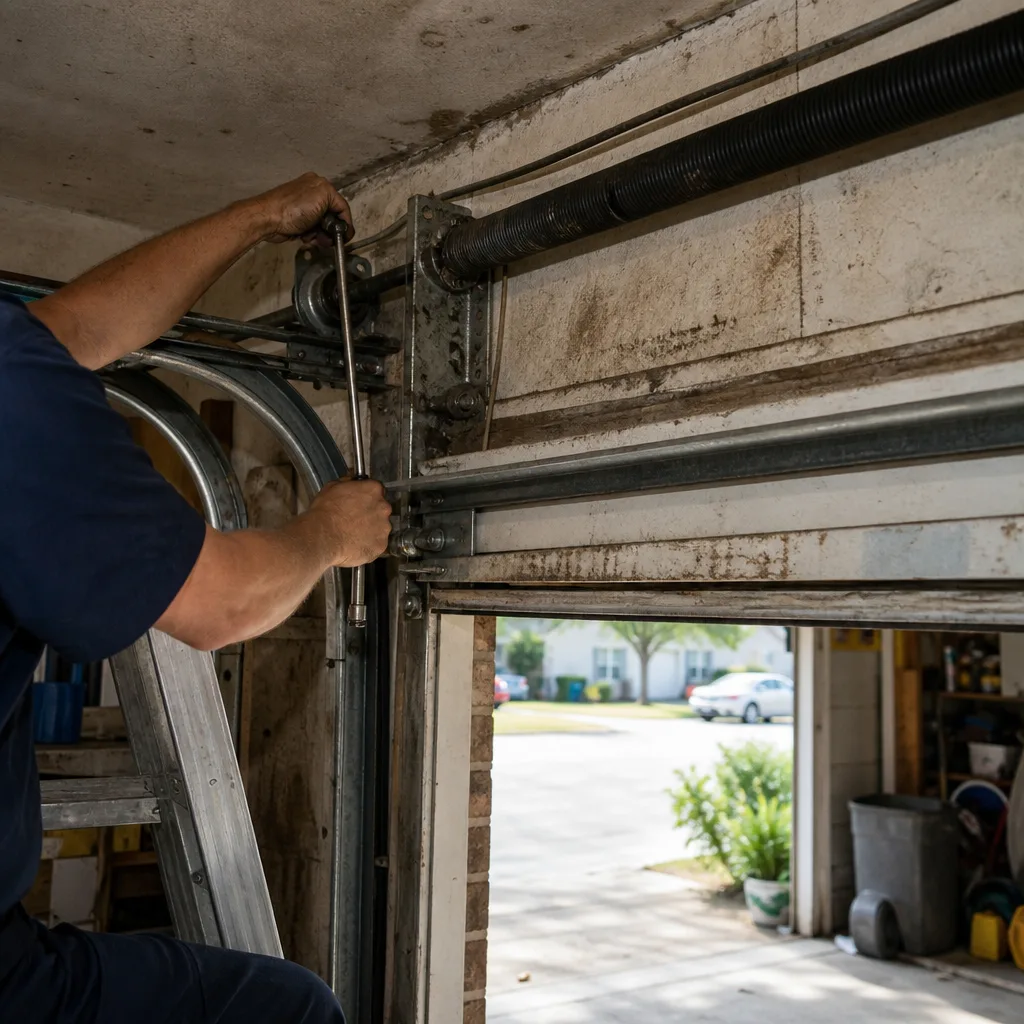 Before
 After
AfterDIY vs Professional Garage Door: The Humble Homeowner’s Decision Guide
Here’s a number most garage door guides won’t lead with: a torsion spring under full tension stores roughly 300 foot-pounds of energy. When it lets go, it doesn’t warn you. Ask any homeowner in Humble who’s spent an evening in the ER instead of the garage, and they’ll tell you the same thing Otto tells every caller: some jobs are worth paying for, and some jobs just aren’t. This guide walks through every common garage door repair, the real cost difference between doing it yourself and hiring a professional, and how to spot the line between a Saturday morning task and a job that needs a licensed hand.
Quick Answer
DIY is genuinely safe for about 40% of common garage door maintenance: weatherstripping, sensor realignment, lubrication, and battery replacement. Professional help is non-negotiable for torsion springs, cables under tension, drum replacement, and any track work where the door is under load. In Humble, the honest cost difference between DIY and professional for a typical repair is often under $100 once you account for tools, time, and the risk of buying the wrong part twice; see our Garage Door Cost Breakdown: The Humble Homeowner’s Reference for 2026 for full details.
Table of Contents
- The Go/No-Go List: What Otto Would Walk You Through, and What He Won’t
- The Honest Cost Comparison: Why Parts vs. Labor Isn’t the Real Math
- Torsion Springs: The One Job Otto Won’t Help You DIY
- Humble’s Climate and Its Effect on DIY Durability
- What to Tell a Professional You Already Tried It Yourself
- The Middle Path: A Pre-Repair Consultation Call
- The Real Tool Cost Most Homeowners Don’t Budget For
- Brand Compatibility: Why Universal Parts Aren’t Universal
The Go/No-Go List: What Otto Would Walk You Through, and What He Won’t
Otto has no financial interest in telling you not to do your own garage door work. Some of it he’d happily walk you through on the phone for free. But torsion spring replacement is the one job he won’t help you DIY, because a spring under tension stores enough energy to take your hand off, and a YouTube video doesn’t teach you what to do when it slips.
Here’s the honest breakdown, based on 29 years of showing up after both successful and failed DIY attempts across Humble:
Genuinely DIY-Friendly Tasks
- Weatherstripping replacement. The rubber strip along the bottom and sides of the door. No springs involved, no cables, no tension. Takes about 30 minutes with a utility knife and a drill. Parts run $15 to $40 for a standard 9-foot door.
- Sensor realignment. If the opener’s safety sensors are blinking and the door reverses, they’re usually just out of alignment. Loosen the wing nut, aim the sensors at each other, tighten. Zero cost, ten minutes.
- Lubrication. A can of silicone spray on the rollers, hinges, and springs every six months extends the life of everything. Do NOT use WD-40. More on that in the climate section.
- Opener remote and keypad battery replacement. If the opener runs but the remote doesn’t, it’s almost always a 10-minute battery swap, not a signal board.
Tasks That Carry Real Risk
- Torsion spring replacement. Non-negotiable professional job. One of ours has done hundreds, and he still treats every single one like a live round.
- Cable replacement or repair. Cables are the only thing keeping the door from falling. If a cable snaps, the door drops. Under load, a broken cable means you’re working against 200 pounds of moving steel.
- Track realignment under load. Tracks can be adjusted, but ONLY when the door is secured and the springs are unwound. Doing it while the door is under tension will throw the whole system out of square.
- Opener force setting adjustments. Wrong force settings are how doors crush things, including fingers and pets. This is why the manual says to use the reversing test.
If you’re not sure which category your job falls into, start at the Otto’s Garage Door home page and give us a call. Otto will tell you straight, even if the answer is “you can do that one yourself.”
The Honest Cost Comparison: Why Parts vs. Labor Isn’t the Real Math
The most common mistake homeowners make when comparing DIY to professional is comparing the price of the part to the price of the labor. By that math, DIY always wins. But that math ignores three things: the cost of tools you’ll buy once and never use again, the value of your Saturday afternoon, and the risk-adjusted cost of getting it wrong.
What a Torsion Spring Actually Costs in Humble
Let’s run the numbers on a torsion spring replacement, the most common garage door repair in Humble and the most dangerous one to attempt yourself:
- DIY part cost: $60 to $120 for a pair of springs, depending on wire size and length.
- DIY tool cost: Winding bars run $30 to $60 for the proper set. A torque wrench that will actually fit the set screw is another $40 to $80. If you already own both and know what you’re doing, you’re not the person reading this guide.
- Professional total in Humble: $180 to $340 installed, including the springs, labor, and a balance test.
The gap between DIY and professional is often under $100. What you’re paying for with a professional is a pair of hands that has done this hundreds of times, a 90-Day Done Right Promise in writing, and the guarantee that if a call-back is needed, there’s a name and a local phone number attached to the work.
The Risk-Adjusted Cost of a Mistake
Here’s what a DIY mistake on a spring replacement actually costs, in the order it usually happens:
- You buy the wrong spring. $60 to $120 gone. Springs are sized by wire gauge, inner diameter, length, and door weight. Get one wrong and the door won’t balance, or worse, the spring won’t have enough tension and the opener strains against the door’s true weight.
- You install it wrong and the door slams. A door that drops from full height hits with the force of a small car at low speed. Bends the panels, cracks the opener rail, sometimes takes out the track. $200 to $800 in secondary damage.
- The spring slips while you’re winding it. The winding bar kicks back. This is the injury scenario. The medical bill, if you keep your hand, starts at four figures with even minimal care.
- Exactly what you did. “I turned the screw” is not enough. What screw, which direction, how many turns. A professional can often diagnose a secondary problem from that description alone.
- What parts you replaced, and where you bought them. Big box store parts are not always the correct spec for a Humble home’s door, even when the package says “universal.” Otto sees universal parts fail at twice the rate of OEM ones.
- What the door is doing now. Not “broken.” Specifically: does it open halfway and stop? Does it reverse before hitting the floor? Does it make a grinding sound at a specific point in the travel? The more precise you are, the more accurately the first visit is stocked.
- Any new damage. If the door dropped, if something bent, if a cable came off the drum. Do not try to put it back before the phone call. A door that’s come off its track under tension is unsafe to touch.
- Whether there’s a vehicle inside. This determines the urgency and the approach. If the car is trapped, we treat it like an emergency, day or night.
- Winding bars: $30 to $60 for a proper set. These are heat-treated steel rods sized exactly to the winding cone. Using rebar or screwdriver shafts is how you lose fingers.
- Torque wrench with a deep socket that clears the set screw: $40 to $80. The set screw on a torsion spring cone needs 14 to 16 foot-pounds of torque. Hand-tight is how springs slip.
- Vise grips or C-clamps to secure the door: $20 to $40. Needed to hold the door in place while the springs are unwound.
- Ladder that reaches above door height safely: many homeowners already own one, but if the only ladder is a 4-foot step stool, that’s another $60 to $120.
For garage door repair in Humble, Otto quotes the price on the phone and holds that number when he gets there. The price you hear is the price you pay. If you want a written second opinion on an estimate you’ve already received, that’s free inside the county.
Torsion Springs: The One Job Otto Won’t Help You DIY
A door is 200 pounds riding on two springs. Respect it. That’s not a slogan. It’s the physical reality of what’s sitting above your car every time you pull into the garage.
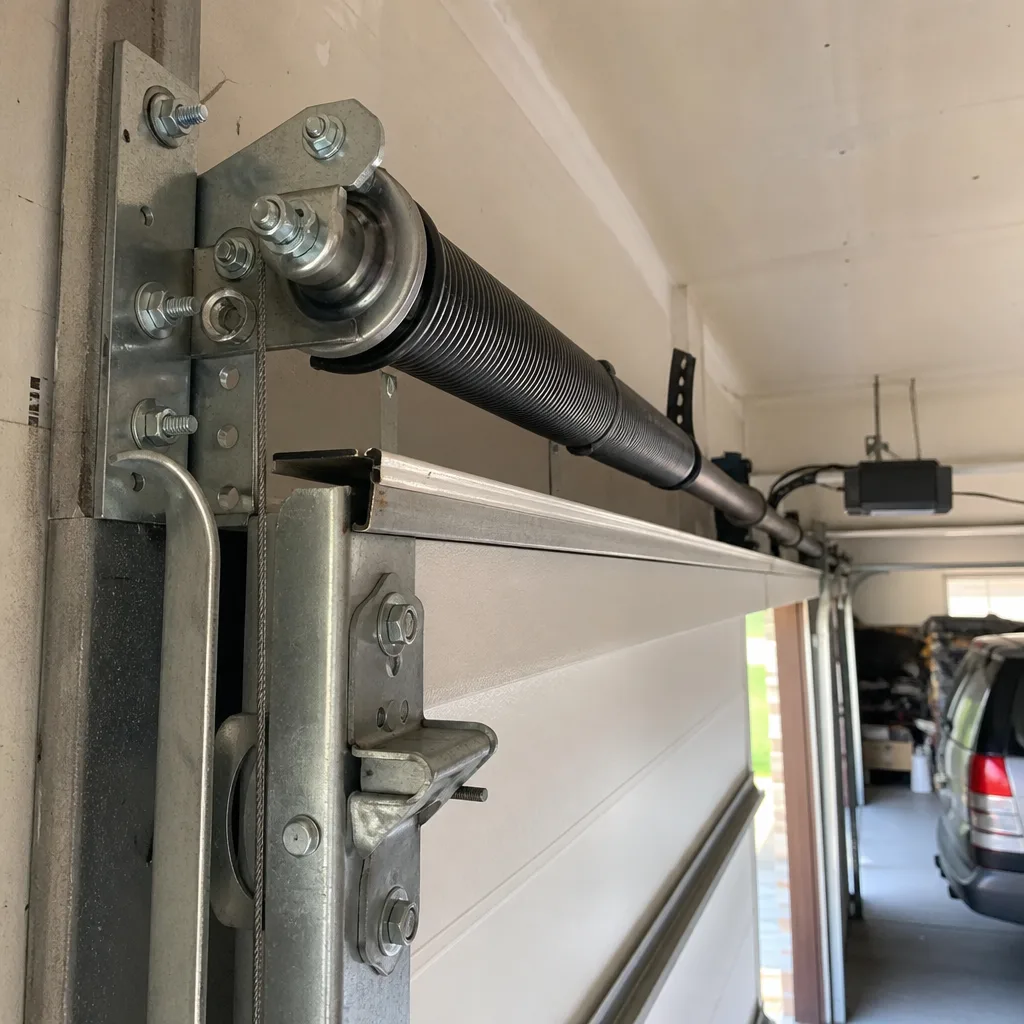
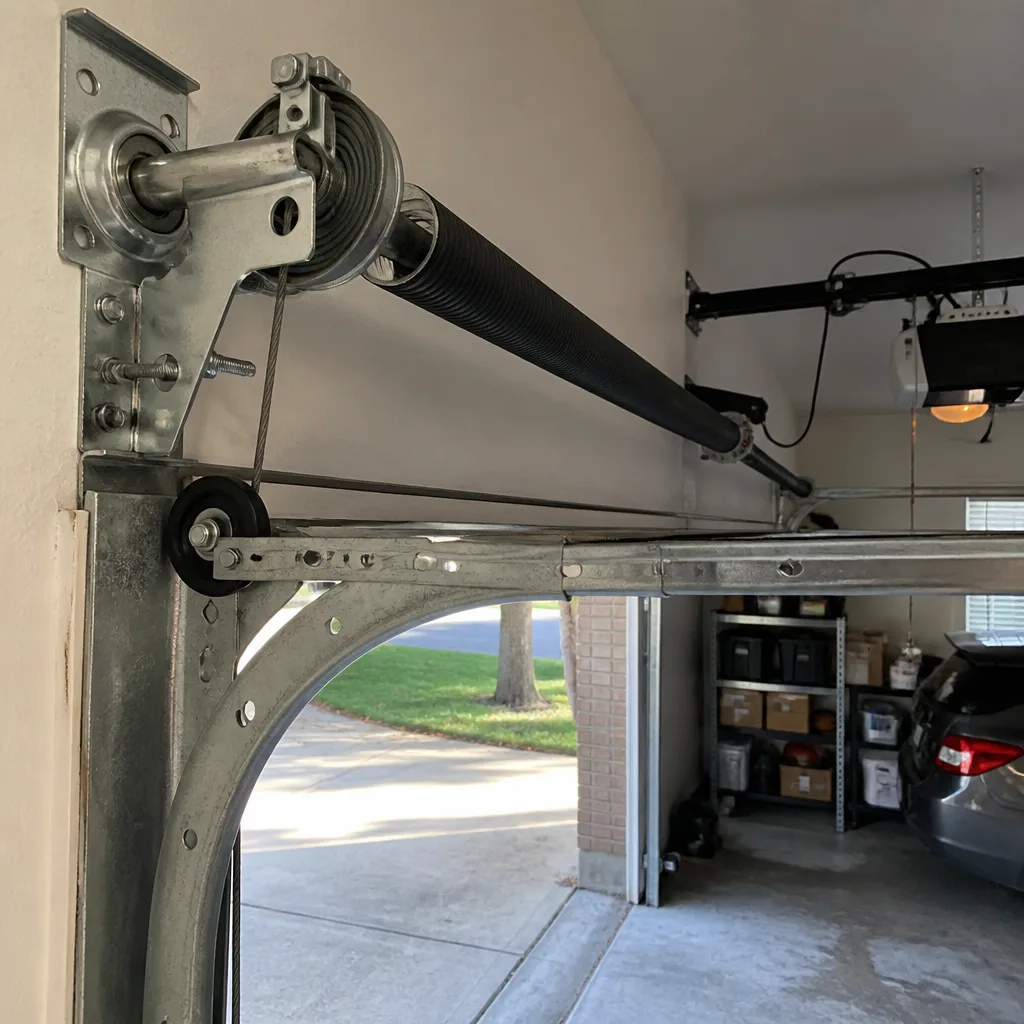
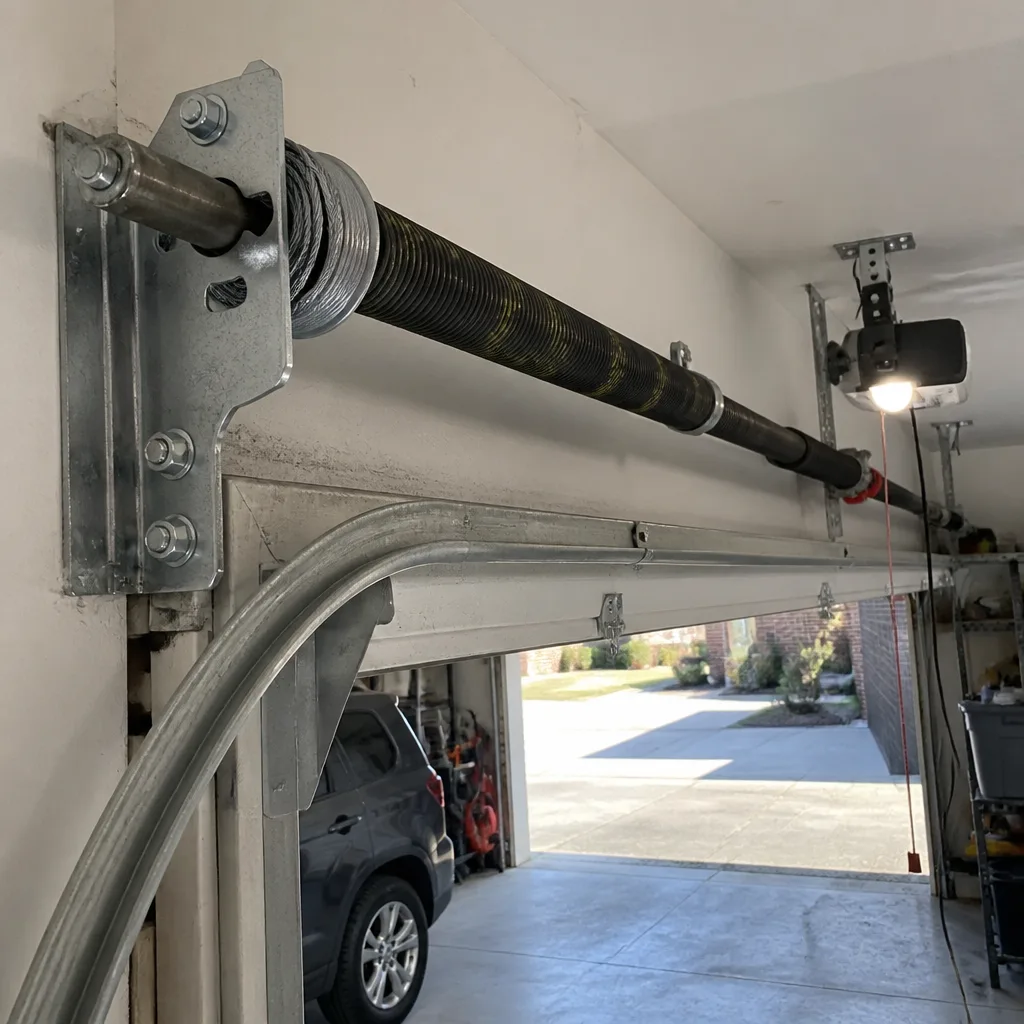
Torsion springs are mounted on a shaft above the door opening. They’re wound tight. The energy they store is what lifts the door. When a spring breaks, it releases that energy at once. The sound is unmistakable, like a gunshot in the garage. If you’re home when it happens, you’ll know.
Otto counts spring cycles the way you count tire miles. A standard torsion spring is rated for 10,000 cycles. That’s roughly seven to ten years of normal use in Humble, where heat and humidity shorten spring life faster than in drier climates. When Otto replaces a spring, he tells the homeowner what’s left on the other one. That’s the kind of detail you don’t get from a box store spring.
Why Otto won’t walk you through this one on the phone: a spring under tension stores enough energy to take your hand off. The winding bars have to be the exact right diameter, seated all the way into the cone. The sequence of quarter-turns has to be precise. If the door isn’t securely braced and the cable slips off the drum during winding, the whole assembly can spin. A professional sees these failure points before they happen because he’s seen them happen. On some other homeowner’s door.
If a spring breaks in Humble, call day or night. A live person answers. Otto quotes the job on the call and holds that number at the door.
Humble’s Climate and Its Effect on DIY Durability
Humble sits in a subtropical climate zone. That means humidity that runs 70% and above through most of the year, heavy spring and fall rains, and summer heat that pushes garage temperatures past 120 degrees on an August afternoon. All of that matters more than most guides admit.
Why Lubricant Choice Matters in Humble
The most common DIY lubrication mistake Otto sees in Humble is WD-40. WD-40 is a solvent and a water displacer. It’s not a lubricant. It strips the existing grease and leaves metal dry. In a climate where humidity provides a constant moisture supply, dry metal rusts faster, and a rusted roller or hinge fails within a season or two of the WD-40 bath.
The right product for Humble’s climate is a silicone-based spray or a lithium white grease. Silicone won’t hold dust and grit the way oil-based products do, which matters in a county with plenty of construction dust and spring pollen. Apply it every six months. That’s a genuinely DIY-friendly job that adds years to a door’s life.
Weatherstripping: Buy for Humidity, Not Just Size
Weatherstripping that’s sized correctly but made for dry climates will crack and separate in Humble’s moisture levels. The bottom seal especially, where standing water from garage floor condensation sits all spring. Look for extruded rubber or vinyl that’s rated for high humidity. Cheap foam seals absorb water and become a mildew source. This is the kind of thing that looks identical in the store and fails completely within six months.
Spring Life in Humble
Springs in Humble don’t fail because they’re old. They fail because they’re rusted. High humidity attacks the spring’s exterior coating, and once the coating is compromised, the wire fatigues at the rust point. Coated springs, like those from Clopay and Amarr, hold up longer in this climate. That’s worth knowing if you’re comparing replacement doors and one quote comes in lower because it uses uncoated springs.
What to Tell a Professional You Already Tried It Yourself
No one calls Otto and says, “I tried to fix it and it didn’t work” with enthusiasm. They call embarrassed, frustrated, and often in a hurry because the car is stuck inside. Here’s what Otto needs to know before he shows up, and why it saves you money:
This is not about judgment. Otto has seen every possible DIY outcome in 29 years, from perfect work that needed no follow-up to doors that had to be entirely re-hung. The only time the details matter is when they’re left out until the truck arrives. A phone call where you tell the truth costs you nothing. A service call where the technician discovers a secondary problem on-site costs you another visit.
The Middle Path: A Pre-Repair Consultation Call
There’s a path between full DIY and full professional service that most homeowners don’t know exists. It’s a phone call. That’s it.
When you call Otto’s Garage Door, a live person answers. Usually Otto. He’ll ask what the door is doing, what you’ve tried, and whether the car is trapped. Then he’ll tell you, based on what you describe, whether the job is DIY-friendly or needs a licensed hand. If it’s DIY, he’ll walk you through it on the phone. For free. No charge for the advice, no pressure to book anything.
If it’s a professional job, he’ll quote the price on that same call and hold it at the door. The number you hear is the number on the invoice. No trip charge inside the county. If you already have a written estimate from another company, Otto will give you a second opinion on it for free.
This is what the L.O.C.A.L. values code means in practice: Local roots, On time, Community first, Accountable, Loyal. Otto would rather keep a customer for twenty years than win one big ticket. That’s not a marketing line. It’s the difference between a business that profits from your confusion and one that profits from your trust.
The Real Tool Cost Most Homeowners Don’t Budget For
The DIY cost discussion always starts with the part and ends with the labor quote. But tools are where the honest math falls apart. Here’s what a spring job actually requires, priced in current Humble market rates:
Total tool investment for a first-time spring job: $150 to $300. For a job the homeowner will likely do once in their lifetime. And that’s before the part.
Now compare: Otto’s professional spring replacement, installed and balanced, is $180 to $340. The tool cost alone often exceeds the labor portion of the professional quote. When you factor in that a professional carries the right tools for every door in Humble, from a 7-foot track-home door in Atascocita to a 10-foot custom door in Kingwood, the DIY savings on a spring job approach zero.
Brand Compatibility: Why Universal Parts Aren’t Universal
One of the most frequent calls Otto gets from Humble homeowners who’ve already attempted a DIY fix starts with the words “I bought a universal.” Universal parts, especially for garage door openers, are built to fit many things and perfectly fit none of them.
Garage door openers in Humble homes run on one of several major brands: Genie, Chamberlain, LiftMaster, Craftsman, and a handful of others. Each brand uses its own frequency, its own safety sensor protocol, and its own travel limit system. A universal remote can often be programmed to work, but a universal safety sensor is a different matter. The sensor sends a beam that the opener’s receiver reads at a specific frequency and with a specific signal timing. Get it wrong, and the door won’t close at all. Or worse, it closes on something because the sensor reverse isn’t working.
Doors themselves are equally specific. A Clopay door uses Clopay’s hinge profile and track spacing. An Amarr door uses Amarr’s. A Wayne Dalton door uses a completely different spring and cable system that many homeowners mistake for a standard setup. Otto is trained across all major brands, including Clopay, Amarr, and Wayne Dalton, and he carries the right parts for each on the truck. When you call a professional who knows the difference between a standard torsion system and a Wayne Dalton TorqueMaster, you’re paying for the fact that the first fix will be the right fix.
Common Mistakes to Avoid
- Using WD-40 as a garage door lubricant. This is the single most common DIY mistake Otto sees in Humble, and it costs homeowners more in premature roller and hinge failure than any other error. Use silicone spray or white lithium grease instead.
- Replacing only one spring. When one torsion spring breaks, the other is usually near the end of its cycle life too. Replacing both at once means the door lifts evenly and you don’t pay for a second service call six months later.
- Buying the wrong spring size. Wire gauge, inner diameter, and length all have to match the door’s weight and track radius. A spring that’s one size off will lift unevenly, and the opener will strain against the unbalanced door.
- Attempting cable work under load. Cables are under the same tension as springs. Cutting or removing a cable while the door is raised and the springs are wound is how doors drop suddenly.
- Skipping the reversing test after an opener adjustment. The reversing test, where a 2×4 on the floor should trigger the door to reverse, is in the manual for a reason. Every opener adjustment should end with this test, and nearly every DIY adjustment skips it.
- Hiring someone without a published address and license number. In Humble, a truck with a magnetic sign and a phone number is not a business. Otto’s Garage Door has a published address and license number any homeowner can verify before the truck arrives.
- Delaying a spring replacement. A door with one broken spring is being lifted entirely by the opener. The opener’s motor is not designed for that load. Within weeks, the opener’s gear strips. A $250 spring job becomes a $650 spring-and-opener job.
When to Call a Professional
Call a professional when the door won’t open and a vehicle is trapped inside. Call when a spring is broken. Call when a cable is frayed, loose, or off the drum. Call when the door comes off its track. Call when the opener’s force settings have been tampered with and the door has become unpredictable. In any of these situations, a Humble homeowner’s best move is a phone call to someone who will quote the job on the phone and hold that price at the door; before you start any project, check Garage Door Permits, Codes & Inspections in TX: What You Need to Know to stay compliant. Otto’s Garage Door offers free estimates in Humble, and a live person answers 24/7, even when a spring lets go at nine at night. Call (281) 826-5240.
Frequently Asked Questions
A professional torsion spring replacement in Humble typically costs $180 to $340 installed, including both springs, labor, and a balance test. The price is quoted on the phone before the visit and does not change at the door. Call (281) 826-5240 for an exact quote on your door.
You can, but you shouldn’t. A torsion spring under tension stores enough energy to take your hand off if the winding bar slips, and the cost of the tools alone often equals the labor portion of a professional quote. Otto will not walk you through this one on the phone because the risk isn’t worth the savings.
Weatherstripping replacement, sensor realignment, lubrication with silicone spray, and remote battery swaps are all genuinely DIY-friendly and take under an hour. None of these involve springs, cables, or any work under load.
No. Otto quotes the job on the phone and holds that number when he gets there. The price you hear is the price on the invoice, guaranteed in writing.
Yes. The truck is stocked with springs, cables, rollers, hinges, sensors, and opener parts for all major brands, including Genie, Clopay, Amarr, and Wayne Dalton. Most repair calls in Humble are completed on the first visit.
Call and tell Otto exactly what you did. He’ll walk through the current symptoms, determine whether a secondary problem exists, and quote the fix on the call. There’s no judgment, and the call is free.
Yes. Estimates are free, and there’s no trip charge inside the home county. A standing Free Second Opinion is available on any written estimate you’ve received from another company. Call (281) 826-5240 and a live person answers.
The Bottom Line
DIY garage door work in Humble is not a single decision. It’s a task-by-task judgment call, and the honest breakdown is this: weatherstripping, sensors, lubrication, and batteries are safe to do yourself. Springs, cables, tracks under load, and opener force settings are not. The cost difference for most repairs is smaller than it looks once tools and risk are counted, and the savings from doing a dangerous job yourself is never worth the downside. When in doubt, call Otto at (281) 826-5240 and get a straight answer from a local owner who has been in this county since 2004, or browse more guides & resources to help decide what’s right for your door.
Written by Otto Reinhardt, Owner at Otto’s Garage Door, serving Humble since 2004.